


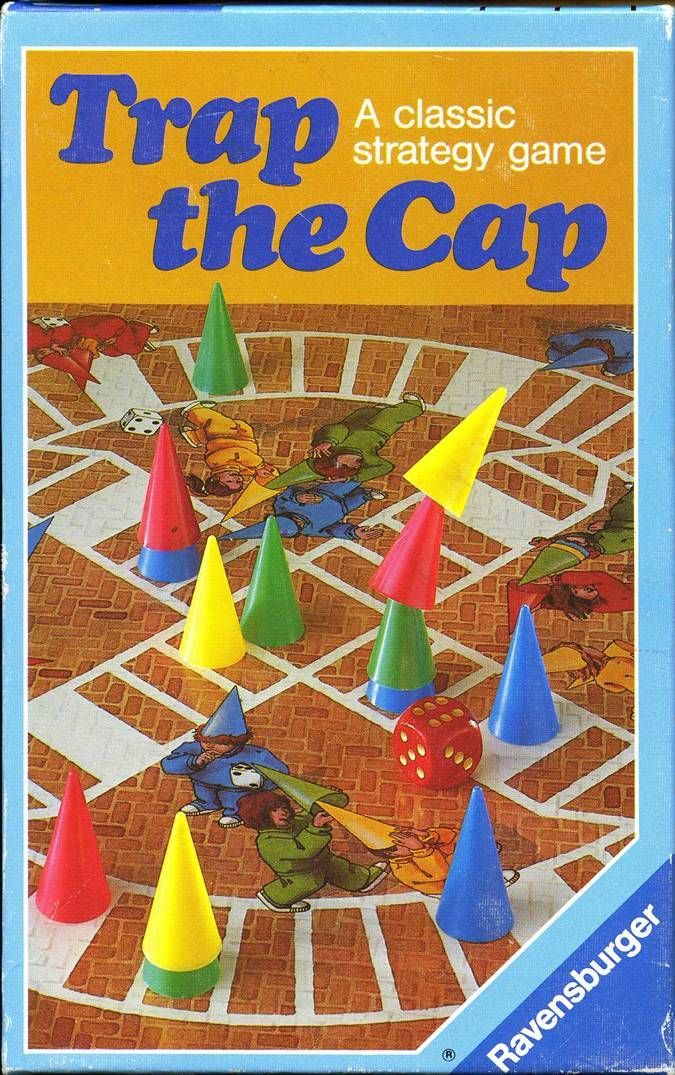
Trap the Cap (1927)
2 - 6 persone
30 - 30 min
6+
Al momento questo prodotto non è disponibile presso nessun venditore.
Nomi alternativi: Bunte Hüte fangen, Caça ao Chapéu, Caccia al Capello!, Caccia Cappello!, Cap the Dunce, Caps, Catch the Hats, Chapeau ... chapeau!, Chapeau...Couvre!, Coppit, Coppit & Cappit, Double Discoveries, Drunter und Drüber, Er Op Of Er Onder, Fang den Hut, Fang den Hut!, Fang den Hut! Das neue Spiel, Hasch mich, Hatt Over Hatt, Hatt-Jakten, Hatte-jagten Hattujahti, Hattjakten, Hoedje Jagen, Hoedje jagen!, Hoedje jagen! / Chapeau... chapeau!, Hoedje op: Hoedje af, Hut Auf Hut, Hütchen-Halchespiel, Hütchenfangen, Jetzt hab' ich dich!, Jeu des chapeaux, le jeu des chapeaux, Kaspi, Lass Dich Nicht Erwischen, Lustige Hüte, Pas op je hoed !, Past op je hoed!, Pega o Chapéo!, Połów kapeluszy, Rapidio, Süvegjáték, Trap the Cap, Trap the Cap!, Wer hat, der hat, Το καπέλωμα
Artisti: Dr. Fritz Ehlotzky, Herbert Leupin
Editori: (Unknown), Carlit, Creative Playthings, Damm / Egmont, Ernst Schu00fctz Spielefabrikation, Grow Jogos e Brinquedos, Hallmark Games, Jumbo, Klee, Mulder, Noris Spiele, Otto Maier Benelux B.V., Otto Maier Verlag, Piatnik, Plasticart, Ravensburger, Rocket Toys and Games, Spear's Games, SPIKA GmbH, Tactic, Verlag Volk und Bild, u03a4u03bf u039au03b1u03bbu03cc u03a0u03b1u03b9u03c7u03bdu03afu03b4u03b9 u0391.u0395.
Editori: (Unknown), Carlit, Creative Playthings, Damm / Egmont, Ernst Schu00fctz Spielefabrikation, Grow Jogos e Brinquedos, Hallmark Games, Jumbo, Klee, Mulder, Noris Spiele, Otto Maier Benelux B.V., Otto Maier Verlag, Piatnik, Plasticart, Ravensburger, Rocket Toys and Games, Spear's Games, SPIKA GmbH, Tactic, Verlag Volk und Bild, u03a4u03bf u039au03b1u03bbu03cc u03a0u03b1u03b9u03c7u03bdu03afu03b4u03b9 u0391.u0395.
Descrizione: An age-old children's game, for which multiple variants exist. Multiple editors and editions.
In the common version of the game, players roll the dice to move their "caps" around the board. If a player lands on another cap or a stack of caps, that player captures the stack by nesting his or her cap on top of the stack. A player then seeks to return that stack of caps to home-base to keep them. The game ends when there is only one active color of caps left on the board. In one version of the game, the winner is the player who captured the most caps of other colors during the course of the game. In the other version of the game, the player who has active caps left on the board is the winner.
According to Miscellaneous Game Book this was first published in 1927 by Otto Maier Verlag. It led to many copycats, including two from Spears.
In the common version of the game, players roll the dice to move their "caps" around the board. If a player lands on another cap or a stack of caps, that player captures the stack by nesting his or her cap on top of the stack. A player then seeks to return that stack of caps to home-base to keep them. The game ends when there is only one active color of caps left on the board. In one version of the game, the winner is the player who captured the most caps of other colors during the course of the game. In the other version of the game, the player who has active caps left on the board is the winner.
According to Miscellaneous Game Book this was first published in 1927 by Otto Maier Verlag. It led to many copycats, including two from Spears.